
Home
 2021 Jun Main Quad
 Metasurface optofluidics for dynamic control of light fields - Nature Nanotechnology (2022)
 Non-local metasurfaces for spectrally decoupled wavefront manipulation and eye tracking - Nature Nanotechnology (2021)
 Electrical tuning of phase-change antennas and metasurfaces - Nature Nanotechnology 16, 667–672 (2021)
 Exciton resonance tuning of an atomically thin lens - Nature Photonics 14 , 426-430 (2020)
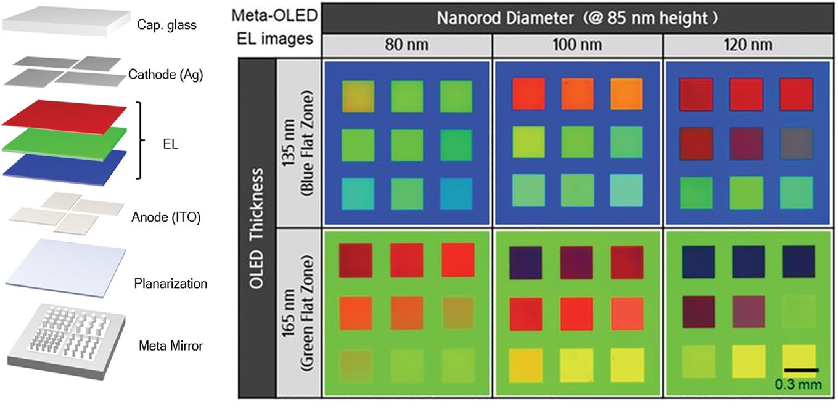 Metasurface-driven OLED displays beyond 10,000 pixels per inch - Science 370, 6515 (2020)
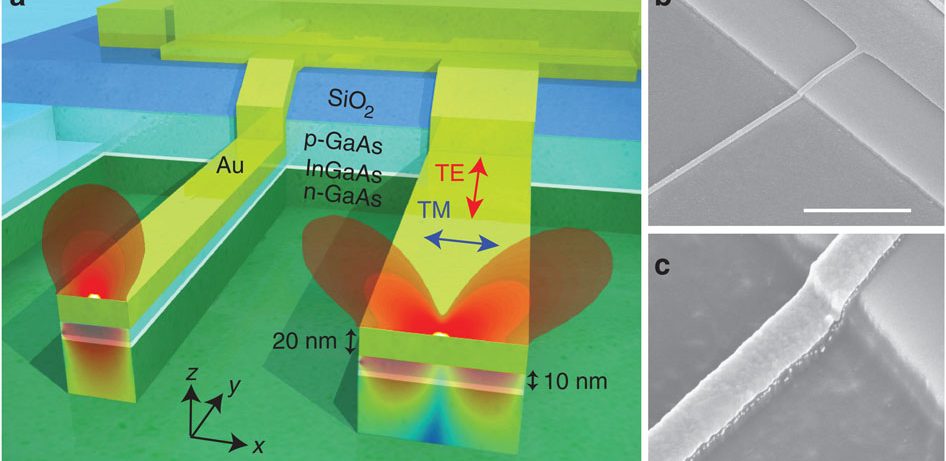
 Purcell effect for active tuning of light scattering from semiconductor optical antennas - Science 358, 6369 (2017)
 2017 Sep Coupa


Patrick Rufangura; Yiyang Cui; Huan Liu; Johan D Carlstrom; Kenneth Crozier; Mark L Brongersma; Yang Yang; Francesca Iacopi
Near unity narrowband infrared thermal emitters on silicon with silicon carbide-germanium metasurfaces Journal Article
In: APL Photonics, vol. 10, iss. 8, 2025.
@article{rufangura2025near,

title = {Near unity narrowband infrared thermal emitters on silicon with silicon carbide-germanium metasurfaces},

author = {Patrick Rufangura and Yiyang Cui and Huan Liu and Johan D Carlstrom and Kenneth Crozier and Mark L Brongersma and Yang Yang and Francesca Iacopi},

doi = {10.1063/5.0271574},

year  = {2025},

date = {2025-08-01},

journal = {APL Photonics},

volume = {10},

issue = {8},

abstract = {Traditional thermal emitters are characterized by an incoherent broadband emission spectrum. However, narrowband coherent thermal emission with a high-quality factor in thermally stable materials is highly desirable for applications such as sensing, thermal energy management, thermophotovoltaic systems, and other infrared technologies. Recent advances in engineered nanostructured polaritonic materials, particularly polar dielectric materials in the mid-infrared (MIR) regime, have enabled new approaches to tailoring narrowband coherent thermal emission. The use of low-loss phonon polaritons in thermally stable silicon carbide provides a promising route to MIR thermal emission. In this work, we demonstrate narrowband, near-unity MIR thermal emission by coupling coherent surface phonon polaritons in a SiC layer with a subwavelength germanium grating on a silicon substrate. The demonstrated polarization-dependent thermal emitter, compatible with silicon fabrication technologies for seamless on-chip photonic integration, exhibits narrowband high emissivity (\>90%) at a wavelength of ∼11 μm. Furthermore, we show that these emitters achieve experimental quality factors well above 100 while maintaining significant emission across a wide range of incident angles for MIR radiation.},

keywords = {},

pubstate = {published},

tppubtype = {article}

}
Skyler P Selvin; Majid Esfandyarpour; Anqi Ji; Yan Joe Lee; Colin Yule; Jung-Hwan Song; Mohammad Taghinejad; Mark L Brongersma
Acoustic wave modulation of gap plasmon cavities Journal Article
In: Science, vol. 389, iss. 6759, pp. 516-520, 2025.
@article{selvin2025acoustic,

title = {Acoustic wave modulation of gap plasmon cavities},

author = {Skyler P Selvin and Majid Esfandyarpour and Anqi Ji and Yan Joe Lee and Colin Yule and Jung-Hwan Song and Mohammad Taghinejad and Mark L Brongersma},

url = {https://brongersma.stanford.edu/wp-content/uploads/2025/08/science.adv1728-2.pdf

https://www.science.org/stoken/author-tokens/ST-2800/full},

doi = {10.1126/science.adv1728},

year  = {2025},

date = {2025-07-31},

urldate = {2025-07-31},

journal = {Science},

volume = {389},

issue = {6759},

pages = {516-520},

abstract = {The important role of metallic nanostructures in nanophotonics will expand if ways to electrically manipulate their optical resonances at high speed can be identified. We capitalized on electrically driven surface acoustic waves and the extreme light concentration afforded by gap plasmons to achieve this goal. We placed gold nanoparticles in a particle-on-mirror configuration with a few-nanometer-thick, compressible polymer spacer. Surface acoustic waves were then used to tune light scattering at speeds approaching the gigahertz regime. We observed evidence that the surface acoustic waves produced mechanical deformations in the polymer and that ensuing nonlinear mechanical dynamics led to unexpectedly large levels of strain and spectral tuning. Our approach provides a design strategy for electrically driven dynamic metasurfaces and fundamental explorations of high-frequency, polymer dynamics in ultraconfined geometries.},

keywords = {},

pubstate = {published},

tppubtype = {article}

}
Hossein Taghinejad; Mohammad Taghinejad; Sajjad Abdollahramezani; Qitong Li; Eric V Woods; Mengkun Tian; Ali A Eftekhar; Yuanqi Lyu; Xiang Zhang; Pulickel M Ajayan; Wenshan Cai; Mark L Brongersma; James G Analytis; Ali Adibi
Ion-assisted nanoscale material engineering in atomic layers Journal Article
In: Nano Letters, vol. 25, iss. 25, pp. 10123-10130, 2025.
@article{taghinejad2025ion,

title = {Ion-assisted nanoscale material engineering in atomic layers},

author = {Hossein Taghinejad and Mohammad Taghinejad and Sajjad Abdollahramezani and Qitong Li and Eric V Woods and Mengkun Tian and Ali A Eftekhar and Yuanqi Lyu and Xiang Zhang and Pulickel M Ajayan and Wenshan Cai and Mark L Brongersma and James G Analytis and Ali Adibi},

doi = {10.1021/acs.nanolett.5c02040},

year  = {2025},

date = {2025-06-13},

urldate = {2025-06-13},

journal = {Nano Letters},

volume = {25},

issue = {25},

pages = {10123-10130},

abstract = {Achieving deterministic control over the properties of low-dimensional materials with nanoscale precision is a long-sought goal. Mastering this capability has a transformative effect on the design of multifunctional electrical and optical devices. Here, we present an ion-assisted synthetic technique that enables precise control over the material composition and energy landscape of two-dimensional (2D) atomic crystals. Our method transforms binary transition-metal dichalcogenides, like MoSe2, into ternary MoS2αSe2(1−α) alloys with systematically adjustable compositions, α. By piecewise assembly of the lateral, compositionally modulated MoS2αSe2(1−α) segments within 2D atomic layers, we present a synthetic pathway toward the realization of multicompositional designer materials. Our technique enables the fabrication of advanced 2D structures with arbitrary boundaries, dimensions as small as 30 nm, and fully customizable energy landscapes. Our optical characterizations further showcase the potential for implementing tailored optoelectronics in these engineered 2D crystals.},

keywords = {},

pubstate = {published},

tppubtype = {article}

}
Ludovica Guarneri; Thomas Bauer; Qitong Li; Jung‐Hwan Song; Skyler P Selvin; Ashley P Saunders; Fang Liu; Mark L Brongersma; Jorik van de Groep
Dynamic Excitonic Beam Switching with Atomically‐Thin Binary Blazed Gratings Journal Article
In: Advanced Optical Materials, vol. 13, iss. 15, pp. 2403257, 2025.
@article{guarneri2025dynamic,

title = {Dynamic Excitonic Beam Switching with Atomically‐Thin Binary Blazed Gratings},

author = {Ludovica Guarneri and Thomas Bauer and Qitong Li and Jung‐Hwan Song and Skyler P Selvin and Ashley P Saunders and Fang Liu and Mark L Brongersma and Jorik van de Groep},

doi = {10.1002/adom.202403257},

year  = {2025},

date = {2025-05-12},

urldate = {2025-05-12},

journal = {Advanced Optical Materials},

volume = {13},

issue = {15},

pages = {2403257},

abstract = {Beam steering metasurfaces are ultra-compact optical coatings that offer on-demand redirection of optical power to specific diffraction orders. To achieve this, spatial gradients are commonly introduced in the phase of light scattered by plasmon or Mie resonant nanoparticles within the metasurface grating's unit cell. However, these phase gradients are oftentimes difficult to tune post-fabrication. Recently, excitons in monolayer 2D semiconductors have emerged as a new metasurface building block, due to their strong and electrically-tunable resonant light-matter interaction. These 2D excitonic metasurfaces offer the tantalizing prospect of beam switching within a single monolayer. Here, it is demonstrated how the 2D analog of binary blazed gratings enables such beam switching by mere nanopatterning of a large monolayer WS2, even though nanoscale ribbons of WS2 do not support geometrical resonances. By introducing a gradient in the nanoribbon width within the metasurface unit cell, an amplitude gradient combined with a small phase gradient in the scattered fields results in asymmetric diffraction efficiencies. Using a scattered-field analysis, it is shown that these gradients can be further engineered via interference effects with the substrate reflection. Finally, the electrical tunability of the exciton resonance is leveraged to achieve selective and dynamic beam switching with an atomically-thin metasurface.},

keywords = {},

pubstate = {published},

tppubtype = {article}

}
-
-
-
-
- Congratulations to Skyler on his research spotlighted on Stanford Report!
- Professor Mark Brongersma has been appointed as the new Faculty Director of the Geballe Laboratory for Advanced Materials (GLAM) at Stanford University.
- Jinwoo is joining our group, welcome!
- Chi-Ching is visiting our group, welcome!
- Omid is joining our group, welcome!
- Youngjin is visiting our group, welcome!
- Bohan is joining our group, welcome!
- Professor Mark Brongersma is elected as MRS fellows in 2023
- Alex is visiting our group, welcome!
- Ludovica is visiting our group, welcome!
-
-
-